
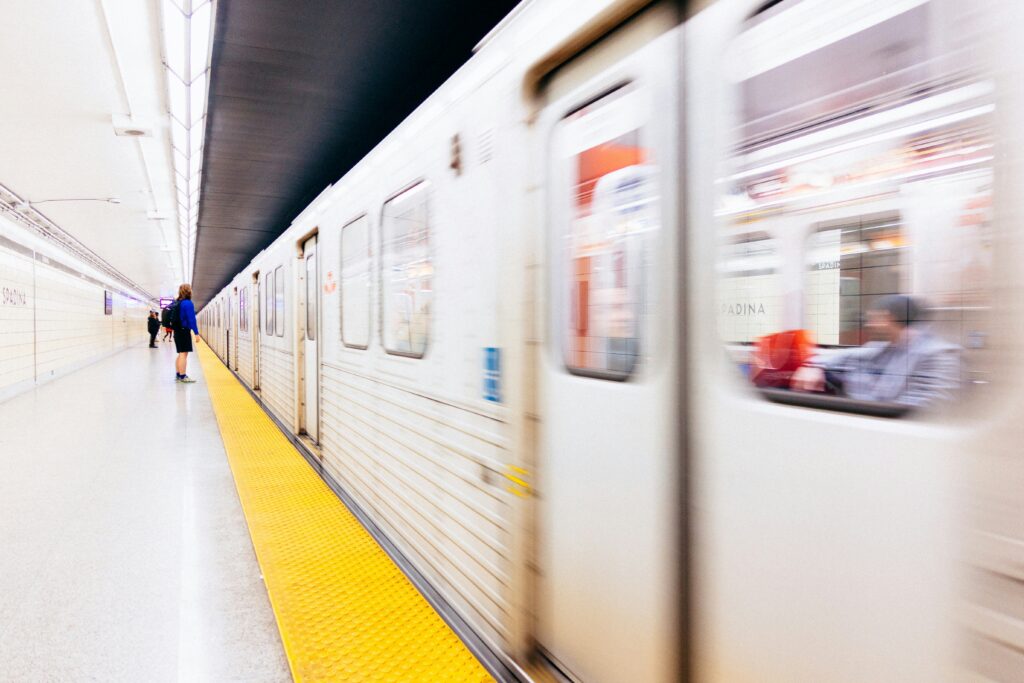
Photo by Jed Dela Cruz on Unsplash
Prepare yourself, I‘m about to begin with one of the top 5 most annoying openers to any sentence, “when I studied abroad…”
When I studied abroad in Madrid, one of the things that stuck out most to me was the “top 40-esque” music played. To a 20-year-old student intaking life outside of the U.S. for the first time, my surroundings were fresh and unknown, but the soundtrack paired with them was outdated and familiar.
Rihanna’s “S&M” (released nine months prior to my arrival) regularly bellowed from storefronts and Katy Perry’s “I Kissed A Girl” (which debuted two and a half years earlier) blasted through the empty first floor of the senior assisted living facility I periodically volunteered at. (I don’t know who was responsible for this song selection, but it is an accompaniment choice that will stay with me forever).
The delayed journey of musical hits from the 50 states to Europe (in 2011) provided me a constant juxtaposition of the present, past, and future (i.e. newer Rihanna and Katy Perry songs I was already aware of).
It was a contrasting coexistence of contemporary, antiquated, and prospective, which is also the perfect encapsulation of public transportation in the U.S.
The contemporary
I love public transit. I have taken it since I was a baby and my bigger baby self of today still relies on it. Via Metro (bus, trains, bikes, and vans) and Metrolink (Southern California commuter rail system), I am able to travel throughout Los Angeles and to the many counties outside of it. Despite living in a city rumored to be “impossible to get around without a car,” I don’t own one and I do not want to. I get where I need to go thanks to the public transit system.
It’s a collage of hustle and bustle whizzing from one place to another (sometimes underground!) and a portrait of a society whose needs are regularly suppressed by what is demanded of them under a capitalist system, à la the man I witnessed crack open a can of clam chowder soup on the bus and pull out a spoon for a meal on the go. Life and the many directions it pulls us in never stops.
On top of meeting my and others’ logistical needs, (in 2019, 9.9 billion trips were taken on public transportation in the U.S.), the American Public Transportation Association has found that:
- Traveling by public transportation is 10 times safer per mile than traveling by automobile.
- Riders can save more than $13,000 per year by using public transit.
Additionally, a typical trip on public transit emits 55% fewer greenhouse gas emissions than driving or ridehailing alone. Oooeee, talk about return on investment! Public transportation in the U.S. may not be perfect, (as anyone who’s ever taken it can tell you), but it gets shit done.
The antiquated
A friend sent me this video a while back and it unintentionally captures some of the flaws with public transit in the U.S.
The video features a woman going through the “hack” of how to get $4 parking when visiting Disneyland. Park for free at the ARTIC (Anaheim Regional Transportation Intermodal Center) and take a city bus for $2 each way to and from Disney, i.e. use a park and ride exactly as it’s intended.
Thanks to public transit, everyone has the ability to not only hop on a bus and ditch outrageous Disney parking costs, but also explore anywhere else the many buses and trains passing through the ARTIC may venture.
The problem is that these magical chariots have a limited timetable. For some reason, public transportation in the U.S. tends to operate as though their services are no longer needed in the evenings or on weekends.
The woman in the video takes OC Rapid bus 553 into the amusement park. This bus is indeed $2, but runs Monday through Friday, 6am until 7pm. In this case, there luckily are other bus routes available to return you the ARTIC outside of those hours, but they may have a different pickup location or cost (the alternative OC buses are $2 while the one under the Anaheim Transportation Network is $4). This case is a relatively mild hiccup, but there are more major ones that can leave you stranded.
For example, I and my carless self could take the Metrolink train down from Los Angeles to go to Disneyland. After an hour train ride from LA Union Station, I’d land at the ARTIC and take any OC or Anaheim bus (for free thanks to a valid Metrolink ticket) into Mickey’s lair. Wanting to get the most out of my overpriced Disney entry fee, I’d stay until they close and wander back to the ARTIC around midnight.
Unfortunately, if stopping by during the week, the last train left at 8:36PM and at 6:46PM if on the weekend. I’m prevented from visiting Disneyland or any other event, sport, or concert venues the ARTIC is conveniently located near because of the restrictive schedule. Boo-hoo for me and that missed Anaheim revenue. Best wishes to anyone relying on these services and others like them for work (good thing the Disney employees aren’t allowed to leave), school, or anything else more vital than a peek at the mouse palace.
Another aspect often hindering public transit in the U.S. is the frequency at which it runs. At the end of the video, the woman states,
“Hot tip for driving back is making sure you’re looking at when the bus arrives so you don’t have to wait at the bus stop longer than needed.”
Hot tip?
hOt T1P!?!?
THAT’S HOW BUSES WORK!!!
It’s also how trains, ferries, planes, and all forms of multiple rider vehicles operate – there’s a schedule.
Hot tip: go to the airport your flight departs from so you’re not waiting in the wrong place. Hot tip: exit the bus after the doors open so you don’t smash your face. WHAT ARE YOU SAYING!?
And this is nitpick-y, but it’s a so-called “hot tip” for “riding” back. The whole point of the video is that you’re not having to deal with driving and parking at Disney, lady whose name I’m too irritated to learn. (I thought this video angered me less now than when I originally saw it and it does not).
Despite the emptiness of her suggestion, it does raise the valid point that it sucks to have to wait around for any form of public transit. If a bus only comes once an hour and you miss it, there’s no chance you’re going to make it to where you’re trying to go on time. A bus once an hour also means you’re likely stuck arriving at your destination much too early or barely late. If I have to be somewhere at 10:00AM and the public transit line only provides arrival for 9:05AM or 10:05AM, I’m wasting time on one end or the other. Not to mention that many trips require the use of more than one transit line, so increased frequency improves connections and ridership ease.
A transit line that runs every 10 minutes or less makes a world of difference, which brings me back to yet another reason the “hot tip” is so aggravating. It should be even more of a nothing statement than it already is. If public transit in the U.S. were at its full potential, its frequency would be such that you wouldn’t need to bother looking up a schedule because the next train or bus is always a few minutes away.
The prospective
Returning to the study abroad sphere, Madrid has fantastic public transportation. In short, their metro runs every few minutes at peak hours and around every 5-9 minutes outside of that. Lines slow to every 15 minutes from midnight until close (1:30AM), but there are night buses that generally start at 11:30PM or 11:45PM and run every 15 or 35 minutes depending on the day. They’ve got you covered.
Madrid public transit is also extremely clean.
I realize I didn’t mention anything of cleanliness or safety when it comes to the archaic areas of U.S. public transit – two worries that tend to arise from others when you say you take it. “Is it safe?” “Is it dirty?” I find those queries grating.
They’re disguised as pondering questions despite screaming solidified opinions. The expression of them to someone who rides public transit (especially when it is their only option for transportation) rather than taking a moment to internally reflect on why those thoughts might be occurring, is judgmental and hurtful because they’re commentary on that person’s way of life.
Public transit is often downplayed as transportation for the poors instead of for the masses. Along with the fact that poor people are still people and deserve nice functioning things and dignity, public transit allows for access, mobility, and freedom – three concepts that seem to get trapped in the convoluted “more for you means less for me” mentality.
Exploring the safety and cleanliness of public transit in the U.S. requires the acknowledgment that it, like many things, is a reflection of larger systemic issues. The lack of funding, expansion, and improvement of public transit in the U.S. as well as the differences amid when and where those things are done means addressing racism, housing inequality, corporate influence, and climate justice. Ta-dah!
As for transit systems outside of the U.S., they may be lightyears ahead of where we are, but that means they provide insight into where we could be.
- In Finland, a bus expediently dropped me directly into the glorious green pastures of nature.
- In Japan, I took a bus into the winding mountains and up to the entrance of a cave-enclosed hot spring.
- In Denmark I could choose from a metro line and not one, not two, but three different city bus lines that stopped at the airport.
All of these instances made my life easier and though they inspired a longing for similar experiences from U.S. public transit, their mere existence illuminated a path toward it.
High quality transit for everyone is possible in rural areas, suburban areas, city hubs, on intricately winding roads, and in less populated places throughout the U.S.
Public transportation’s almighty wheels are at the ready. They’re just waiting for the U.S. to get on board.